
Have you ever wondered why two white t-shirts can look identical on the hanger, but one costs PHP 300 and the other PHP 2,000?
And more importantly, why the cheap one turns into a rag after three washes, while the other one stays crisp for years?
The secret isn’t always the brand name. The secret is the fabric physics.
According to textile science, “quality” isn’t just a feeling. It is measurable. Things like weight (GSM), fiber length, and hidden construction layers determine if a garment will make you look polished or sloppy.
If you want to build an Elevated Basics wardrobe, you need to stop shopping with your eyes and start shopping with your hands. Here are the three technical details that make a garment look premium.
1. The Weight Check (Understanding GSM)
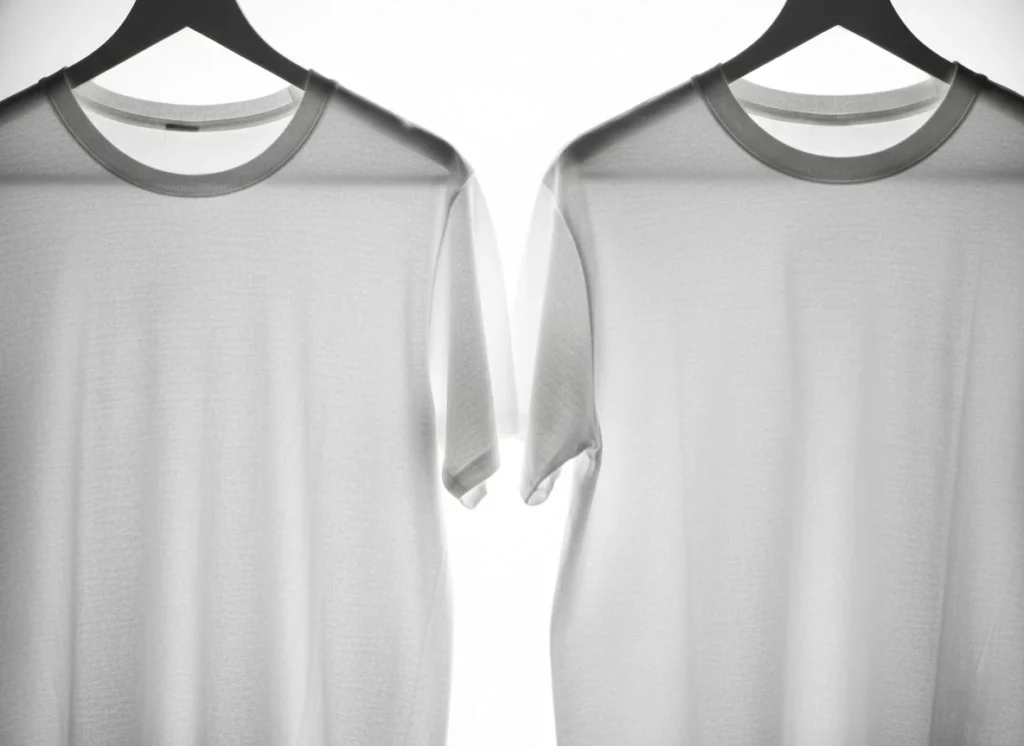
In the Philippines, we are terrified of “thick” fabrics because of the heat. So, we buy thin, flimsy clothes. But thin fabric is exactly what makes an outfit look cheap. It clings to bra lines, shows sweat marks, and loses shape instantly.
The Metric: Fabric weight is measured in GSM (Grams per Square Meter).
- Low Quality (Under 150 GSM): This is “fast fashion” weight. It’s often sheer and flimsy.
- The Sweet Spot (150–200 GSM): This is the gold standard for a premium t-shirt. It is heavy enough to drape smoothly over your body (hiding bumps) but breathable enough for the Manila heat.
- The Lesson: When shopping online, check the description for “GSM.” If you’re in a store, weigh the fabric in your hand. Premium basics should feel substantial, not airy.
2. The Fiber Source (Natural vs. Synthetic)

Many brands sell “Satin” blouses that look shiny and pretty. But be careful—if that satin is made of 100% Polyester (a petroleum-based plastic), it will trap heat and sweat against your skin. That is not luxury; that is a portable sauna.
The Premium Choice: Look for “Elevated Naturals” or “Regenerated” fibers.
- Pima Cotton: This uses “Extra-Long Staple” fibers, making the fabric softer and more resistant to pilling than regular cotton.
- Cupro or Tencel: These are eco-friendly fibers made from plant pulp. They feel like silk and drape beautifully, but they are breathable and moisture-wicking.
- The Lesson: Always read the inner tag. If it says 100% Polyester, put it back. If it says 100% Cotton, Linen, or Tencel, you are paying for quality.
3. The Hidden Structure (Interlining)
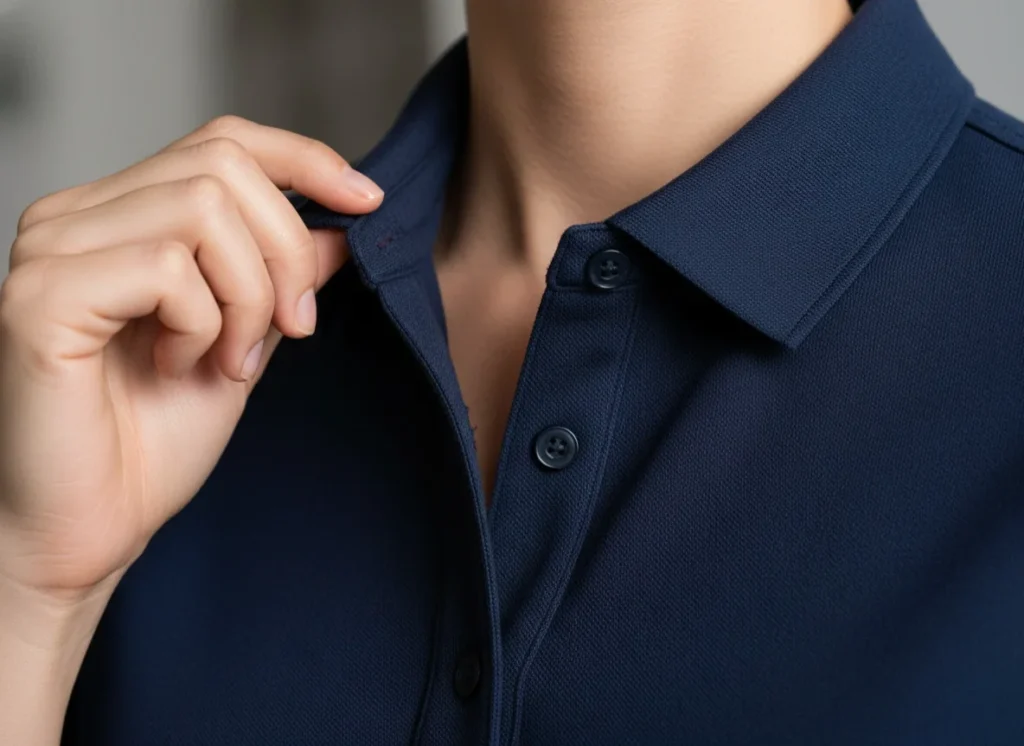
Have you ever worn a polo shirt where the collar curled up like a potato chip? Or a blazer that looked saggy at the shoulders?
That is a lack of Interlining.
The Metric: Interlining is a hidden layer of fabric placed inside collars, cuffs, and plackets to provide shape. It is the “skeleton” of the garment.
- Cheap Construction: Skips this layer to save money, relying on the fabric alone to stand up (it won’t).
- Premium Construction: Uses fused or woven interlining to ensure the collar snaps back into place and the cuffs stay crisp.
- The Lesson: Squeeze the collar and the button placket. It should feel thicker and slightly stiffer than the sleeve of the shirt. If it feels flimsy, it will look messy within an hour of wearing it.
The Takeaway
You don’t need to be a textile engineer to dress well, but you do need to be a smart shopper.
True “Quiet Luxury” isn’t about logos. It’s about a t-shirt with the right GSM that doesn’t see through. It’s about a linen shirt with a collar that stands up. It’s about choosing fabrics that respect your skin and your style.

Find The Perfect Look!
Discover Stylish, Quality Clothing That Elevates Your Everyday Style

About the author
Meredith M. is a Senior Business Analyst in Metro Manila who spent over a decade as an accountant before switching careers. She loves singing with her band, exploring coffee shops with her business partner, and stress-testing her phone screen with endless fashion scrolling. Through this blog, she shares her love for fashion to empower women to express themselves with style, confidence, and authenticity.